
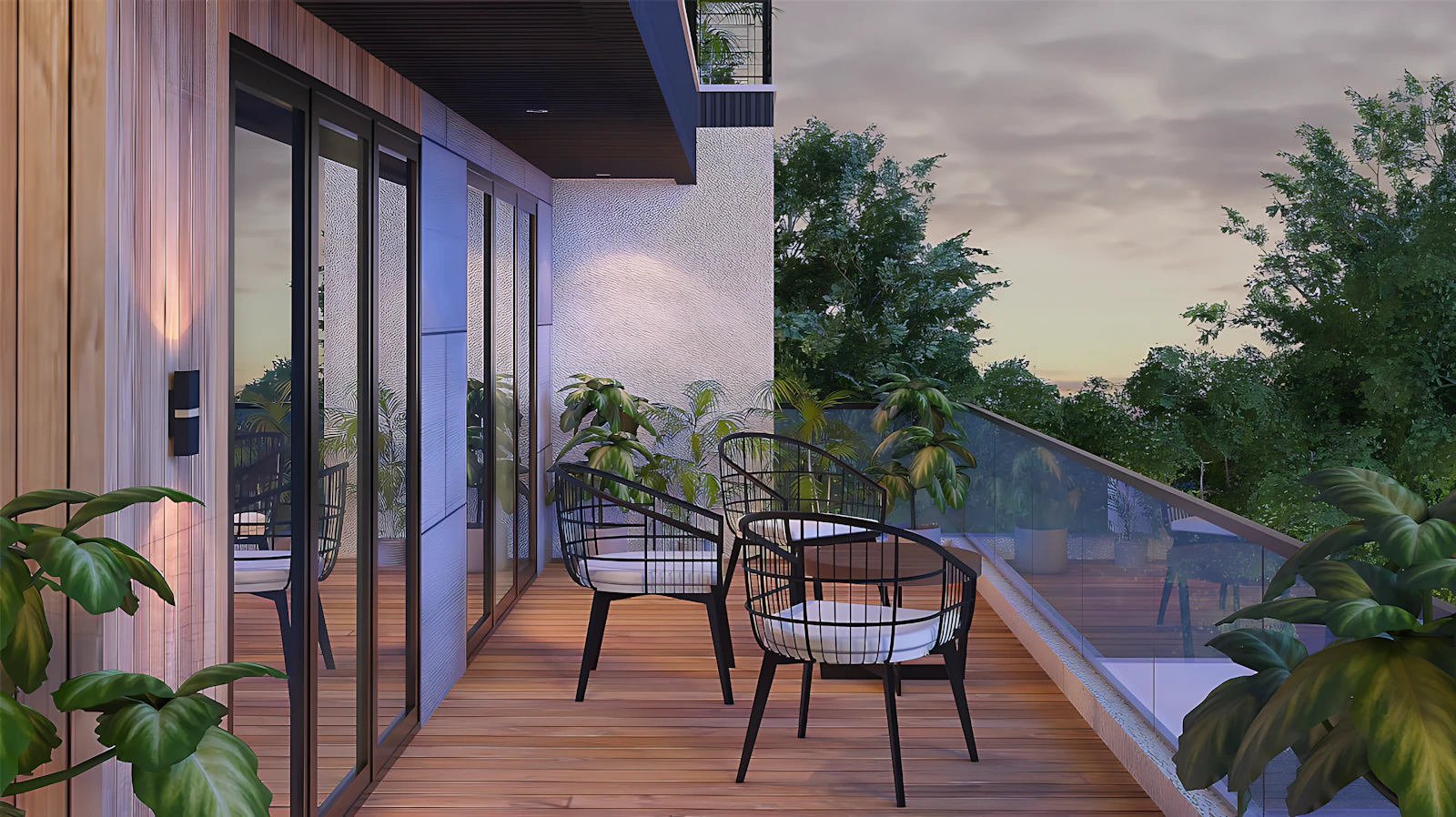
Why Balcony Coating Systems Fail — And How to Get It Right
By April, the Philippine sun is relentless. Surface temperatures on exposed concrete balconies and terraces can exceed 60°C at peak hours, while overnight humidity keeps substrates perpetually damp. For high-rise residential towers, resort terraces, and commercial podium decks, this thermal cycling — heat expansion by day, moisture absorption by night — is one of the most destructive forces a coating system will ever face.
The result? Cracked screeds, delaminating tiles, faded paint, and costly remediation work that disrupts tenants and erodes developer reputation. What separates a five-year fix from a fifteen-year finish isn't just product selection — it's understanding why tropical conditions demand a fundamentally different approach to balcony coating systems and terrace finishes in the Philippines.
This guide is written for architects, interior designers, property developers, and contractors who are specifying or installing exterior horizontal and vertical surfaces in tropical climates. Whether you're finishing a high-rise residential tower in BGC, a resort villa in Boracay, or a commercial rooftop in Cebu, the principles here apply.
Understanding the Tropical Threat to Exterior Coatings
Before specifying any system, it helps to understand exactly what Philippine weather does to exposed surfaces. The country's tropical climate creates a unique combination of stressors that don't occur simultaneously in most temperate markets:
- Ultraviolet radiation: The Philippines sits between 5° and 20° north latitude, receiving near-perpendicular solar radiation year-round. UV Index readings of 11–12 (Extreme) are common from March through May. Coatings not formulated for UV stability will chalk, fade, and embrittle within 12–24 months.
- Hydrothermal cycling: Daily temperature swings of 15–20°C between afternoon peak and pre-dawn lows cause constant expansion and contraction. Over a year, an exposed concrete slab undergoes thousands of micro-movements that stress coating bonds.
- Salt-laden air: Coastal projects — and the Philippines has thousands of kilometers of coastline — face chloride ion penetration that accelerates corrosion in reinforced concrete and degrades adhesion in coating systems not formulated for marine environments.
- Monsoon intensity: The southwest monsoon (habagat) delivers sustained rainfall from June through October. Ponding water on improperly sloped or sealed terraces creates hydrostatic pressure that lifts coatings from the substrate.
- Biological growth: Warm, humid surfaces are ideal environments for algae, mold, and mildew — particularly on shaded balconies and terraces that don't fully dry between rain events.
Any coating system specified for balconies and terraces in the Philippines must address all five of these threat vectors simultaneously — not just one or two.
Material Selection: What Actually Works in Tropical ConditionsHorizontal Surfaces: Floors, Decks, and Walkways
For the horizontal surfaces of balconies and terraces — the areas underfoot — the primary requirements are slip resistance, waterproofing integration, UV stability, and abrasion resistance. Ceramic and porcelain tiles remain common, but their grout lines are chronic failure points in tropical conditions. Water infiltrates grout, freeze-thaw cycles (less relevant in the Philippines, but thermal cycling still applies) degrade the bond, and replacement is labor-intensive and disruptive.
Aggregate-based flooring systems offer a compelling alternative for outdoor horizontal surfaces. Mineral Sand Flooring from TechStone is an aggregate-based system designed specifically for outdoor commercial areas — pool decks, resort walkways, driveways, and podium landscapes. Its inherent texture provides the slip resistance required by the National Building Code for wet exterior surfaces, while the continuous, grout-free application eliminates the infiltration pathways that undermine tile installations over time. For resort terraces and hotel pool decks where aesthetics and safety must coexist, this kind of system delivers on both fronts without the maintenance overhead of grout-dependent alternatives.
When specifying any flooring system for outdoor horizontal surfaces, ensure that the waterproofing membrane beneath is compatible with the coating system above. A technically excellent topcoat applied over a failing waterproofing layer will never perform to specification — the substrate preparation and the coating system must be treated as a single integrated solution.
Vertical Surfaces: Balustrades, Facade Panels, and Perimeter Walls
The vertical surfaces of balconies and terraces — balustrade walls, facade spandrels, boundary walls between units — present a different set of challenges. Here, the primary concerns shift toward weather resistance, UV-stable color retention, and the ability to maintain a premium aesthetic despite constant environmental exposure.
Spray-applied stone finish systems are increasingly the specification of choice for exterior vertical surfaces on high-rise residential and commercial projects. Liquid Granite is a spray-applied, pattern-coated stone finish that replicates the texture and depth of natural granite on vertical surfaces. Critically, it is formulated to be UV-stable and weather-resistant — properties that are non-negotiable for any exterior facade coating in the Philippines. On balcony spandrel panels and perimeter walls, it delivers the premium stone aesthetic that developers and designers want, without the structural load implications of actual stone cladding.
For projects where a more refined, polished concrete or natural stone look is the design intent — increasingly popular in boutique hotel and resort developments — Opus offers a sintered sand and polished concrete aesthetic suited to exterior vertical surfaces. Its natural stone character is well-suited to resort villa facades, commercial boundary walls, and the exterior-facing panels of terrace balustrades, where the material reads as sophisticated rather than industrial.
Both systems are appropriate for outdoor environments, but it bears repeating: these are vertical surface coatings. They should never be specified for horizontal flooring applications, where compressive load, slip resistance, and water drainage are entirely different engineering considerations.
Application Best Practices for High-Rise and Commercial ProjectsSubstrate Preparation: The Step Most Failures Trace Back To
In the Philippines construction industry, substrate preparation is consistently under-budgeted and under-supervised — and it is consistently the root cause of premature coating failure. For balcony and terrace applications, the substrate must be:
- Structurally sound: Any delaminating concrete, hollow tiles, or failing screeds must be removed and repaired before coating. Applying a premium finish over a compromised substrate is the most expensive false economy in construction.
- Clean and contaminant-free: Curing compounds, form release agents, efflorescence, and biological growth must all be removed — typically by mechanical grinding or shot blasting for horizontal surfaces, and by pressure washing plus chemical treatment for vertical faces.
- Adequately cured: New concrete should cure for a minimum of 28 days before coating application. In Philippine conditions, where construction schedules are often compressed, this is frequently violated — with predictable consequences.
- Moisture-controlled: Substrate moisture content must be within the coating manufacturer's specified range. In the Philippines, achieving this on exterior surfaces during the wet season often requires temporary sheltering and mechanical drying.
Timing and Environmental Conditions During Application
Application timing matters significantly in tropical conditions. Coating application during peak heat hours (10am–3pm) risks flash-drying on vertical surfaces, which compromises adhesion and finish quality. Early morning application — before 9am — is generally preferred for exterior work, giving the coating time to cure before peak UV exposure.
During the rainy season, exterior application windows are narrow. Experienced contractors in the Philippines typically work in short, weather-monitored sessions, and application should never proceed when rain is forecast within four to six hours of application, or when relative humidity exceeds the manufacturer's specified maximum. These are not optional guidelines — they are the difference between a coating that performs for fifteen years and one that fails in fifteen months.
Waterproofing Integration
No discussion of terrace finishes is complete without addressing waterproofing. In the Philippines, building leaks are among the most common and costly post-construction defects. For balconies and terraces, a properly specified and applied waterproofing membrane — applied before any decorative flooring or coating system — is essential.
The waterproofing membrane must be carried up the vertical faces of all perimeter walls to a minimum height of 300mm (some specifications require 500mm), creating a continuous bathtub-like barrier. The junction between horizontal and vertical surfaces — the cove — is the most common failure point and must be reinforced with detail mesh before membrane application.
Decorative flooring systems, including aggregate-based systems, should be applied only after the waterproofing layer has been fully tested (typically by ponding test) and approved. Skipping this sequence to save time is one of the most expensive decisions a contractor can make on a high-rise residential project.
Aesthetic Considerations: Balancing Durability and Design
For property developers and design teams, the challenge isn't only technical — it's aesthetic. Balconies and terraces are among the most visible elements of a residential or commercial project, appearing in marketing materials and influencing purchasing decisions. The finish must perform technically AND look premium for the life of the project.
The good news is that the systems available today in the Philippine market are significantly more sophisticated than the painted concrete and ceramic tile defaults of a decade ago. Spray-applied stone finishes bring genuine material depth and texture to facade surfaces. Aggregate flooring systems create continuous, natural-looking deck surfaces that complement resort and lifestyle residential branding. The days of choosing between durability and aesthetics are effectively over for specifiers who know the available options.
For projects where the terrace connects to an indoor-outdoor living area — increasingly common in high-end condominium developments — the transition between interior and exterior finishes deserves careful attention. Seamless flooring systems that can transition between indoor and outdoor zones, with appropriate surface treatments for each environment, create a visual continuity that elevates the overall design quality. Explore how leading projects are handling these transitions in TechStone's project portfolio.
Maintenance Planning: Extending Coating Life in Tropical Climates
Even the best-specified coating system will underperform without a basic maintenance protocol. For high-rise residential and commercial projects in the Philippines, building management teams should establish:
- Annual inspection cycles: Check for surface cracking, delamination, biological growth, and drainage obstruction before the rainy season begins (typically May).
- Biological growth management: Algae and mildew should be treated with appropriate biocidal wash and removed promptly — left untreated, biological growth retains moisture against the coating surface and accelerates degradation.
- Drainage maintenance: Floor drains and scuppers should be cleared of debris quarterly. Ponding water is one of the fastest ways to compromise a terrace coating system.
- Touch-up protocols: Minor damage to coating surfaces should be addressed promptly. Small cracks and chips left untreated become pathways for water infiltration that undermine the entire system.
Specifying for Long-Term Value
The real cost of a balcony or terrace coating system is never just the initial material and application cost — it's the total cost of ownership over the building's lifecycle. A system specified and applied correctly in Philippine tropical conditions should deliver a minimum of ten to fifteen years of service with basic maintenance. Systems that fail in three to five years — as poorly specified or applied coatings frequently do — carry remediation costs that far exceed the initial savings.
For architects and developers operating in a market where client expectations are rising and construction defect liability is increasingly scrutinized, specifying proven, climate-appropriate systems from reputable suppliers isn't just good practice. It's professional risk management.
The Philippines' tropical climate is demanding, but it's entirely manageable with the right material knowledge, application discipline, and maintenance commitment. The buildings that get this right — from the waterproofing membrane to the decorative finish coat — are the ones that look as good in year ten as they did on handover day.
For more information on TechStone's coating solutions for exterior facades and outdoor surfaces, visit techstone.com.ph/applications/facades or explore the full range of finishes at techstone.com.ph/finishes.