
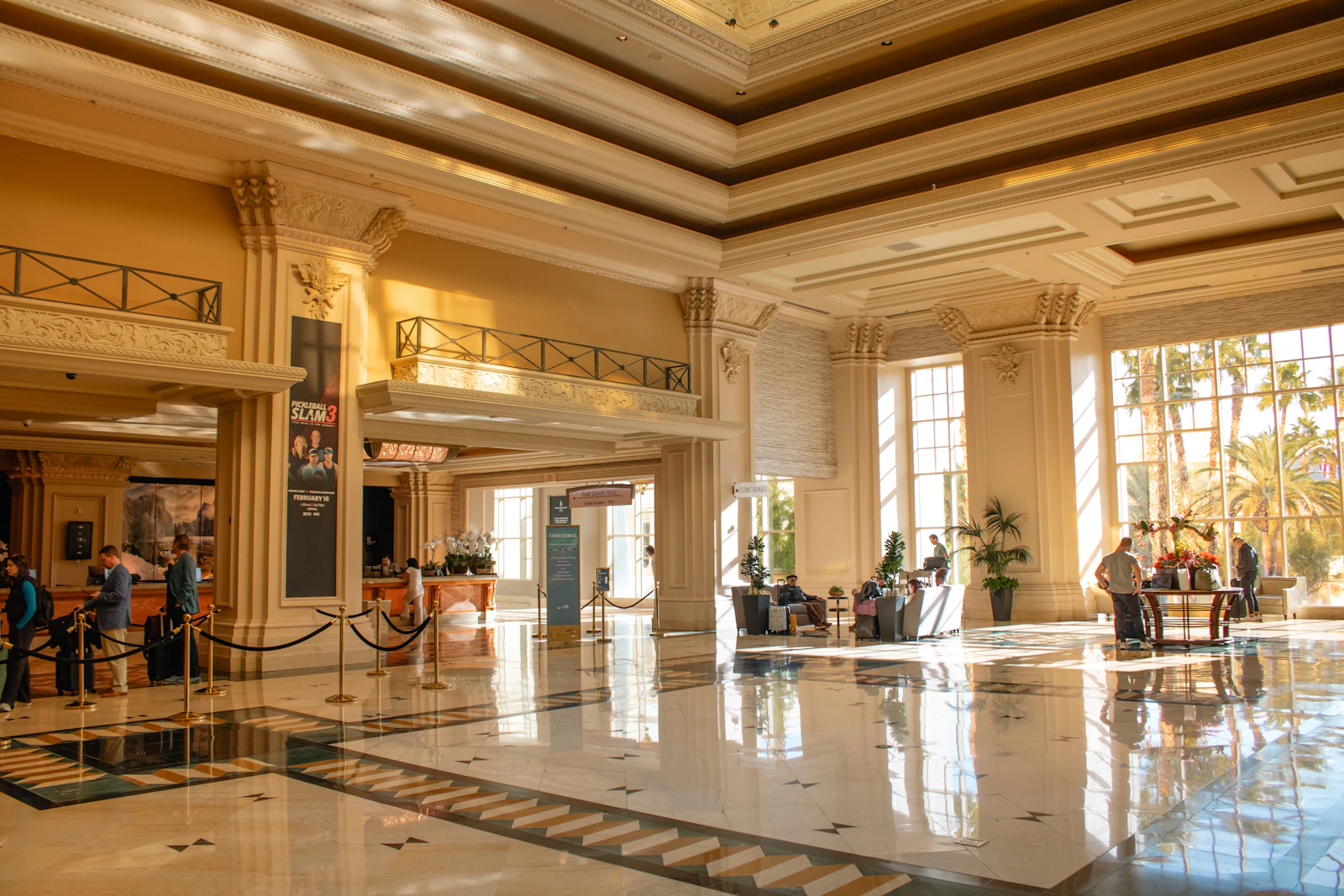
Why Commercial Lobby Design Has Become a Strategic Priority
The lobby is no longer a transitional space. In 2026, it is a declaration — of brand values, of quality, of intent. As commercial real estate competition intensifies across Metro Manila, Cebu, and the wider Philippine market, property developers and building owners are recognizing a fundamental truth: tenants, guests, and clients form lasting impressions within seconds of entering a space. Those first seconds happen in the lobby.
According to a 2024 report by Cushman & Wakefield Philippines, tenant retention rates in premium office towers are significantly higher in buildings that have undergone lobby renovations within the past five years. The data aligns with what architects and interior designers have long understood intuitively — commercial lobby design is not an aesthetic exercise. It is a business strategy.
For hospitality projects, the stakes are even higher. A hotel entrance coating sets the tone for the entire guest experience. A resort lobby finish communicates whether the property belongs in the budget or luxury tier before a single word is spoken at the front desk. In this environment, surface finishes are no longer finishing touches — they are foundational design decisions.
The Science of First Impressions in Commercial Interiors
Research in environmental psychology consistently shows that humans process spatial environments holistically, not sequentially. When a guest enters a lobby, they are simultaneously registering light reflection, texture depth, material warmth, spatial proportion, and surface quality. Premium interior surfaces communicate competence, care, and status in ways that no signage or furniture selection can fully replicate.
This is precisely why luxury wall finishes have moved to the center of commercial design briefs across the Philippines. A lobby wall treated with a high-quality architectural coating does more than look impressive — it anchors the spatial experience. It gives the eye somewhere compelling to rest. It tells the visitor that every detail in this building has been considered.
The shift is also driven by a generational change in occupant expectations. The workforce now entering Philippine corporate towers grew up with design literacy cultivated by social media, travel, and global hospitality benchmarks. They expect their workplace lobbies to meet the same visual standard as the premium hotels and retail environments they frequent on weekends. For property developers, meeting that expectation is no longer optional — it is a leasing imperative.
Luxury Wall Finishes: The Technical Case for Premium Coatings
When architects and interior designers specify wall finishes for commercial lobbies, they are balancing a complex matrix of requirements: visual impact, material durability, maintenance practicality, installation timeline, and long-term performance under high foot-traffic conditions. Natural stone, while perennially desirable, presents significant challenges in this context — weight loading on structural systems, inconsistency of veining across large surface areas, vulnerability to cracking during seismic events, and escalating procurement costs.
Premium architectural coatings have emerged as the intelligent answer to this design problem. When engineered to the standards required by commercial applications, they deliver the visual character of natural materials — stone, polished plaster, concrete — with substantially better performance profiles. The best systems are UV-stable, moisture-resistant, impact-tolerant, and repairable in the field without full surface replacement.
In the Philippine context, this performance argument carries additional weight. The country's tropical climate — high humidity, intense UV exposure, frequent temperature variation — creates conditions that stress conventional finishes. Architectural coatings formulated for these conditions do not simply look better at installation; they maintain their appearance over the long operational life of a commercial property.
Venetian Plaster Effects and the Polished Finish Renaissance
Among the most compelling trends in hotel entrance coatings and corporate lobby design is the resurgence of polished plaster aesthetics. The Venetian plastering tradition — refined over centuries in European palaces and civic buildings — has found a powerful modern expression through contemporary coating technology.
TechStone's Liquid Polish brings this heritage finish into 21st-century commercial design. A Venetian plaster-style coating with a mirror-like reflective surface, Liquid Polish transforms lobby feature walls into dramatic focal points that engage light dynamically throughout the day. As natural light shifts from morning to evening, a polished wall surface reads entirely differently — adding a living quality to the space that static materials cannot replicate.
For hotel lobbies, this effect is particularly powerful. The reflective depth of a Liquid Polish wall creates an immediate association with luxury and craftsmanship — the same visual language found in the world's great five-star properties. For executive office towers and high-end retail environments, it communicates sophistication and investment in quality that resonates with premium tenants and their clients alike. Explore how this finish performs in real project environments at TechStone's project portfolio.
Seamless Surfaces and the Case Against Grout Lines
One of the defining characteristics of premium lobby design in 2026 is the seamless surface — continuous planes of material unboken by grout joints, expansion gaps, or panel seams. This aesthetic preference is not purely visual. Seamless surfaces are also easier to maintain in high-traffic commercial environments, eliminating the grout lines that trap dirt, harbor bacteria, and degrade visually over time.
For lobby flooring and wall surfaces where a seamless, contemporary aesthetic is the design objective, Microcement delivers exceptional results. This trowel-applied coating creates continuous, grout-free surfaces across both floors and walls, making it particularly valuable in lobby zones where the floor-to-wall transition is a deliberate design element. Available in both Course and Fine textures, Microcement can be calibrated to the specific tactile and visual register the design calls for — from the raw, industrial warmth of a creative agency headquarters to the refined restraint of a luxury condominium entrance.
The material's versatility also makes it ideal for reception desk surrounds, feature column cladding, and bathroom cores adjacent to lobby areas — creating a cohesive material language that extends the lobby experience throughout the ground floor program.
Designing for Philippine Commercial Real Estate: Context Matters
Specifying architectural coatings Philippines projects require a nuanced understanding of how local conditions interact with material performance. The Philippines is not a uniform design context — a beach resort lobby in Palawan has entirely different environmental demands than a Makati CBD corporate tower or a Bonifacio Global City mixed-use retail podium.
In resort and hospitality settings, where interior and exterior zones blur and lobbies often open to outdoor areas, coating systems must handle humidity cycling, salt air exposure, and the transition between shaded and sun-exposed surfaces. In urban commercial settings, the primary demands shift to abrasion resistance, ease of maintenance, and the ability to maintain visual quality under constant cleaning and high occupant volumes.
Understanding this context allows architects and designers to specify with precision rather than guesswork. A polished wall finish like Liquid Polish is ideally suited to the controlled interior environment of a hotel lobby or executive reception area, where its reflective qualities can be optimized by thoughtful lighting design. In environments where the lobby transitions to semi-outdoor zones, a more robust exterior-rated coating system may be appropriate for boundary walls and facade elements — a context where TechStone's Opus system, with its sintered sand and polished concrete aesthetic, delivers natural stone character on exterior vertical surfaces without the weight or maintenance burden of natural stone itself.
The Role of the Architect and Designer in Coating Specification
Premium architectural coatings are design tools, not commodity materials. Their successful application in commercial lobby environments depends on the depth of specification — understanding not just which product to apply, but how light, texture, color, and spatial proportion interact with the chosen finish.
This is why the most successful lobby transformations in the Philippine commercial market have consistently been the result of close collaboration between coating applicators and the design team. The specification of a feature wall finish is not a procurement decision made at the tail end of a project — it is a design decision that should inform ceiling heights, lighting positions, furniture selections, and the overall spatial composition of the entrance sequence.
Architects working with premium interior surfaces like Liquid Polish or Microcement in lobby applications benefit from understanding the full range of available finishes before locking in design directions. Reviewing finish options early in the design development phase — rather than during value engineering — allows the full expressive potential of these materials to be realized within the project's spatial concept.
Maintenance, Longevity, and Total Cost of Ownership
A conversation that is increasingly central to lobby coating specifications in the Philippine commercial market is total cost of ownership — not just installation cost, but the full lifecycle economics of a surface finish. Premium architectural coatings consistently outperform lower-cost alternatives on this metric.
A high-quality Microcement floor in a lobby environment, properly sealed and maintained, will retain its aesthetic quality for significantly longer than conventional tiling systems that require periodic grout replacement and risk individual tile failure. A Liquid Polish feature wall, once installed, requires minimal ongoing maintenance and can be refreshed or repaired in isolated areas without full surface replacement — a critical advantage in occupied commercial buildings where lobby downtime is operationally disruptive.
For property developers and building owners evaluating coating specifications, framing the investment in lifecycle terms rather than unit cost terms almost invariably strengthens the case for premium finishes. The difference in installation cost between a commodity finish and a premium architectural coating is typically recovered within the first maintenance cycle — and the aesthetic return on that investment begins generating tenant appeal from day one of occupancy.
Building the Lobby of 2026: A Design Checklist
For architects, interior designers, and developers approaching a commercial lobby design project in the current Philippine market, the following considerations provide a framework for coating specification decisions:
- Define the experiential objective first. Is the lobby communicating corporate authority, hospitality warmth, creative energy, or luxury exclusivity? The finish selection should serve this narrative directly.
- Map the environmental conditions. Interior-only, semi-outdoor, high humidity, direct UV exposure — these factors determine which coating systems are appropriate before aesthetic preferences enter the conversation.
- Consider the full ground floor material language. Lobby coatings should connect coherently with adjacent spaces — corridors, lift lobbies, amenity zones — rather than functioning as isolated feature moments.
- Involve coating specialists early in design development. The full expressive range of premium finishes like Liquid Polish or Microcement is best understood through physical samples evaluated in the actual light conditions of the project space.
- Specify for maintenance reality, not installation day. The lobby finish that looks extraordinary at handover and degrades within two years is a liability, not an asset. Specify for sustained performance under real-world commercial conditions.
Elevating Philippine Commercial Design Through Surface Excellence
The competitive landscape of Philippine commercial real estate in 2026 rewards design courage and material quality in equal measure. Lobbies that trade in visual clichés — generic marble-effect tiles, generic paint finishes, generic material palettes — are increasingly invisible to the tenants, guests, and clients that drive commercial property value.
The buildings that command premium rents, high occupancy rates, and genuine brand loyalty are the ones where the design team made deliberate, confident choices about every surface — including, and especially, the lobby walls and floors that define the first experience of the building.
Premium architectural coatings are among the most powerful tools available to the Philippine design community for creating those experiences. When specified with intention and applied with expertise, finishes like Liquid Polish and Microcement do not simply cover surfaces — they create them. They transform walls and floors into spatial experiences that communicate quality, care, and design intelligence to every person who walks through the door.
That is the promise of commercial lobby design done at the highest level. And in a market as dynamic and demanding as the Philippines in 2026, it is a promise worth keeping.