
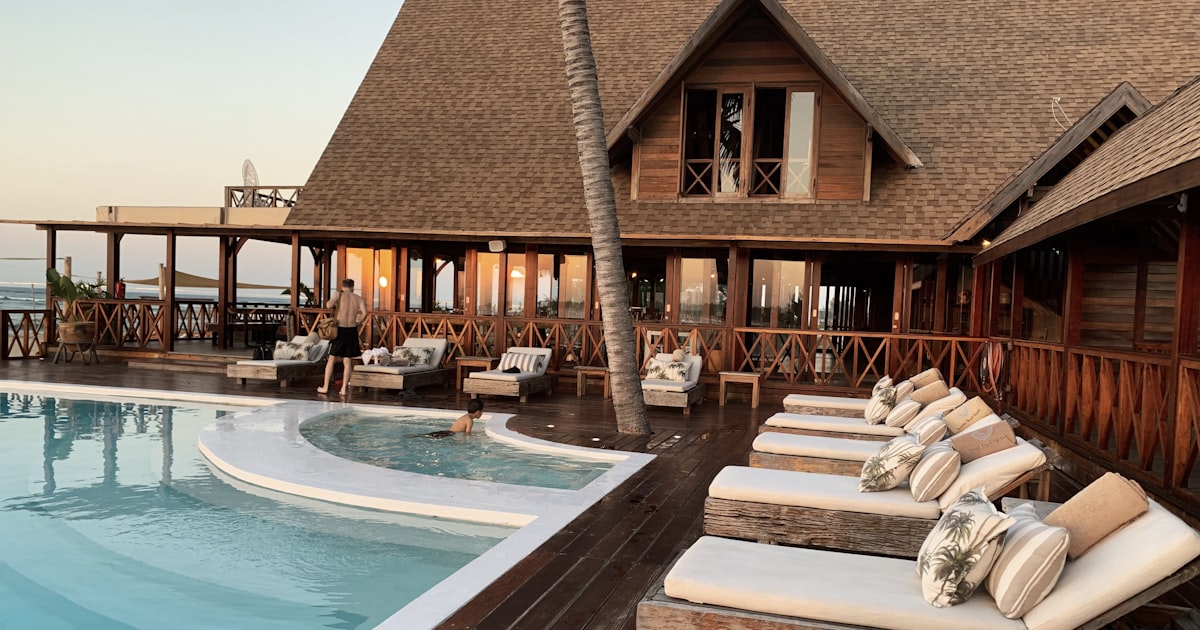
Walk through the lobby of any recently completed boutique hotel in Bangkok, Bali, or Manila, and you will encounter a common material thread: seamless, monolithic surfaces that flow from floor to wall to reception desk without interruption. The grout lines, tile edges, and material transitions that once defined interior surfaces have been replaced by continuous planes of colour and texture. The material responsible for this transformation, more often than not, is microcement.
Why Hospitality Embraced Seamless
The shift toward seamless surfaces in hospitality design is not merely aesthetic — although the aesthetic argument is compelling. It is driven by a convergence of practical considerations that align with the operational realities of hotel management.
Hygiene is paramount. Grout lines in tile installations harbour bacteria, mould, and staining agents that are difficult to clean and impossible to fully sanitise. In wet areas — bathrooms, pool surrounds, spa facilities — these joints become maintenance liabilities. Microcement eliminates joints entirely, presenting a continuous, non-porous surface that can be cleaned with standard protocols and maintained without specialist intervention.
Durability under traffic is equally critical. A hotel lobby may see thousands of footfalls per day, luggage wheels, cleaning equipment, and the occasional dropped piece of furniture. Microcement floor systems, when properly specified with coarse-sand base layers and protective topcoats, withstand this abuse without the cracking and chipping that plague thin ceramic tiles in high-traffic environments.
The Design Language of Restraint
The aesthetic appeal of microcement in hospitality lies in what it does not do. It does not impose pattern. It does not create visual boundaries. It does not compete with furniture, artwork, or architectural form. Instead, it provides a neutral, textured canvas — a background material that supports rather than dominates the design narrative.
This quality of restraint is particularly valued in the current design moment, where hospitality interiors have moved away from maximalist decoration toward material authenticity. Guests expect surfaces that feel genuine — tactile, imperfect, and grounded in material reality. Microcement delivers this quality because it is a mineral material. Its subtle colour variations and trowel marks are not defects to be concealed but characteristics to be celebrated.
System Architecture for Hospitality Environments
A microcement installation in a hotel is not a single product applied in a single pass. It is a layered system, each component engineered for a specific function within the composite structure.
The sequence typically begins with a bonding primer applied to the prepared substrate. This primer — a polymer-rich emulsion — penetrates the pore structure of the concrete or screed and establishes the adhesive bridge for subsequent layers. On floor installations, a layer of alkali-resistant glass fibre mesh is embedded in the primer to reinforce the system against substrate movement and crack propagation.
The body coats follow: one or two applications of coarse-sand microcement for floors, or fine-sand microcement for walls, each mixed from a two-component system of dry powder and polymer emulsion. These coats build the visual surface and the mechanical body of the system. Between coats, light sanding with 80 to 180-grit abrasive paper ensures intercoat adhesion and surface uniformity.
The protective topcoat — typically a two-component polyurethane or water-based acrylic sealer — provides chemical resistance, stain protection, and the desired surface sheen. In hospitality environments, satin finishes are generally preferred over high gloss, as they reduce glare, conceal minor surface wear, and maintain a more natural material appearance over time.
Colour as Atmosphere
Microcement is available in an extensive colour palette — typically eighteen or more standard shades ranging from bone white through warm earth tones to deep charcoal. In hospitality applications, the colour selection is driven less by trend and more by the emotional register the designer seeks to achieve.
Warm neutrals — sand, clay, linen — create welcoming, grounded atmospheres appropriate for reception areas and guest rooms. Cool greys and slate tones suggest sophistication and urbanity, suited to bars, restaurants, and contemporary suites. Dark charcoals and anthracites provide dramatic backdrops for feature walls and statement spaces.
The material's inherent tonal variation — the result of hand application with steel trowels — ensures that even within a single colour, the surface exhibits depth and movement. This quality is impossible to replicate with factory-produced tiles or synthetic coatings, and it is precisely this organic variation that designers and guests find compelling.
The Operational Advantage
For hotel operators, the lifecycle economics of microcement are persuasive. The initial installation cost is competitive with mid-to-high-range tile systems when total costs — including substrate preparation, adhesive, grouting, and finishing — are compared on a like-for-like basis. But the maintenance advantage accumulates over time: no grout to re-seal, no tiles to replace, no material transitions to re-caulk. The surface is refinished rather than replaced, and a well-maintained microcement installation can exceed fifteen years of service before requiring intervention.
In an industry where guest expectations rise annually and renovation cycles compress accordingly, a material that delivers both design impact and operational efficiency represents a rare alignment of creative and commercial interests.