
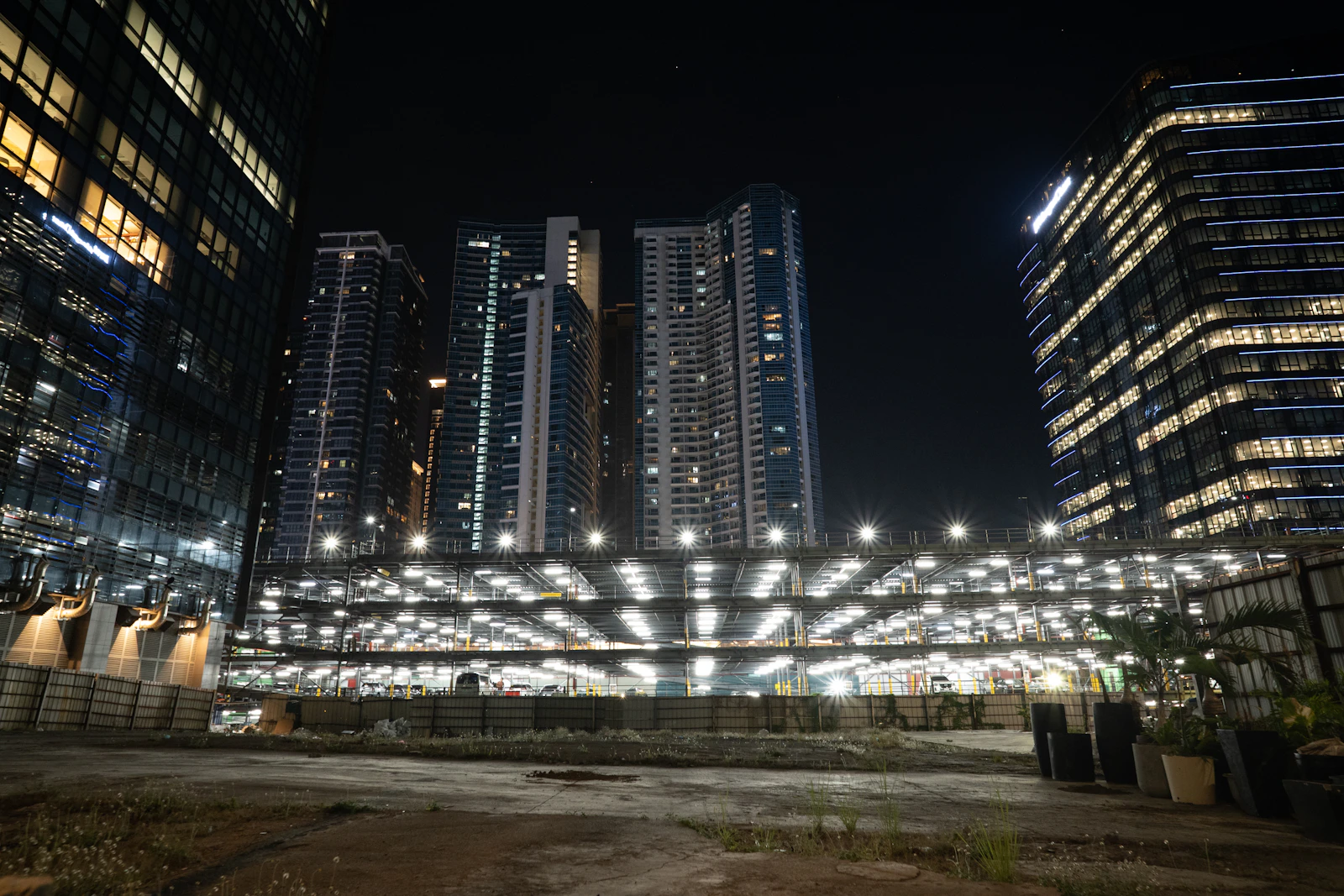
Why Parking Garage Flooring Design in the Philippines Deserves a Second Look
There is a quiet revolution happening beneath the wheels of every car that pulls into a premium Manila hotel, resort, or mixed-use development. Architects and property developers across the Philippines are beginning to ask a question that was almost unthinkable a decade ago: What should a parking garage actually look like?
With the country's commercial construction sector posting record project pipelines—driven by the rise of integrated resort developments in Pasay and Parañaque, luxury condominium towers in Bonifacio Global City, and lifestyle malls expanding across Metro Manila and key provincial capitals—parking facilities are no longer a footnote in the design brief. They are, in many cases, the first and last architectural experience a guest or customer encounters. That first impression carries enormous weight.
Yet the default remains a predictable palette: bare concrete walls, unsealed gray floors, and fluorescent lighting that strips away any sense of arrival. For a ₱5-billion resort development or a flagship branded hotel, this is a significant missed opportunity. The good news is that commercial coating technology has advanced to the point where parking garage aesthetics are no longer a compromise—they are a design decision.
The Commercial Case for Branded Parking Facilities in Manila
Before exploring materials, it is worth understanding why the business argument for investing in parking aesthetics has become so compelling in the Philippine market.
First, competition among premium commercial developments has intensified to the point where brand differentiation extends to every physical touchpoint. Hospitality groups, in particular, have long understood that the guest journey begins the moment a vehicle enters a property—not when a guest reaches the reception desk. A parking facility that communicates quality, cleanliness, and design intention reinforces the brand promise before a single interaction with staff occurs.
Second, the operational lifespan of a parking structure—typically 30 to 50 years—means that surface systems must deliver not just aesthetics, but durability, chemical resistance, and ease of maintenance over decades of heavy traffic. Choosing the right coating system is as much a lifecycle cost decision as it is a design choice.
Third, regulatory and safety considerations around slip resistance, especially in tropical climates where wet-season flooding and condensation create persistent hazards, mean that flooring specifications must balance performance with appearance. The good news is that modern decorative coating systems are engineered to meet both demands simultaneously.
Rethinking the Parking Floor: From Sealed Concrete to Designed Surface
The parking floor is the largest single surface in any multi-level parking structure. It is also the surface that takes the most punishment: tire abrasion, oil and fuel spills, cleaning chemicals, hydrostatic pressure, and in Philippine conditions, the constant thermal cycling between intense heat and monsoon moisture.
Historically, the response to these demands has been purely functional: epoxy sealers, bare concrete, or at best, line markings in safety yellow. These solutions address durability but surrender entirely on design intent. They also age poorly—epoxy floors chalk, peel, and discolor under UV exposure and chemical attack, requiring costly re-application every three to five years.
Seamless Flooring Systems for Commercial Parking
For interior parking levels—the basement and podium decks that form the majority of parking area in most commercial developments—Microcement represents a significant step forward in commercial parking flooring design. As a trowel-applied seamless coating system, Microcement eliminates the grout lines and expansion joint accumulation points that make conventional tiled or patterned floors difficult to keep clean in high-traffic parking environments.
The seamless surface created by Microcement also resists the oil penetration and chemical staining that degrades conventional concrete over time. Available in both Course and Fine textures, it can be specified to provide the tactile grip required for pedestrian walkways within a parking structure—an increasingly important consideration as integrated developments blur the boundary between parking deck and retail promenade. The Course texture, in particular, offers meaningful slip resistance for pedestrian zones adjacent to vehicle lanes, where wet footfall from monsoon rain is a daily reality.
Beyond performance, the design versatility of Microcement opens genuine creative territory. A parking level finished in a cool mid-tone gray with a Course texture reads as considered and premium. Paired with bold wayfinding graphics applied directly to the sealed surface, it creates a cohesive branded environment rather than a utilitarian box. For hotel and resort projects where the parking structure is integrated into a larger architectural composition, that coherence matters.
Explore how TechStone's floor coating applications are being specified across commercial projects in the Philippines.
Outdoor Parking Decks and Podium Surfaces: The Slip-Resistance Imperative
Open-air parking decks, resort drop-off areas, and podium surface carparks present a different set of challenges. Here, UV exposure, tropical rainfall, and the need for robust slip resistance under wet conditions move to the top of the specification criteria. The aesthetic ambition does not diminish—if anything, these surfaces are more visible and more closely associated with the overall architectural impression of a development—but the performance baseline is higher.
Aggregate-Based Flooring for Resort and Commercial Landscapes
This is the environment where Mineral Sand Flooring delivers its most compelling value proposition. As an aggregate-based flooring system engineered specifically for horizontal and landscape surfaces, Mineral Sand is designed from the ground up for outdoor commercial conditions. Its inherent slip resistance comes from the aggregate texture of the system itself, not from a topcoat additive that wears away under traffic—a critical distinction for surfaces exposed to the volume of foot and vehicle movement seen in a busy hotel drop-off zone or resort vehicle court.
In the Philippine context, where resort developments in destinations like Boracay, Palawan, and the Batangas coastline are investing heavily in their arrival experiences, the ability to specify a flooring system that looks as considered as the surrounding landscaping—while meeting the practical demands of pool-adjacent surfaces, outdoor walkways, and vehicle courts—is genuinely transformative. Mineral Sand Flooring has been applied to pool decks, resort walkways, and commercial driveways precisely because it bridges that gap between landscape aesthetics and engineering performance.
For property developers building integrated mixed-use projects in Metro Manila, the same logic applies to podium parking decks that double as outdoor amenity spaces. A rooftop carpark that transitions into a landscaped terrace or F&B area demands a flooring system that works across both functions—and a slip-resistant aggregate system with genuine design presence meets that specification far better than painted concrete or conventional epoxy.
Vertical Surfaces: Bringing the Building Identity into the Parking Structure
Floors are only half the story. The walls and support columns of a parking structure represent significant surface area that, in most commercial projects, is either left as bare concrete or painted in a utilitarian white. Neither approach contributes to the architectural identity of the development.
For exterior-facing parking structure walls—the facades of multi-story car park buildings, the perimeter walls of open-decked structures, and the boundary walls of commercial parking precincts—decorative coating systems can extend the visual language of the main building envelope into what would otherwise be a deliberately anonymous element of the composition.
Spray-applied stone finish systems are particularly effective here, allowing large vertical surfaces to be treated with a natural stone aesthetic at a fraction of the cost and weight of cladding panels. For parking structures adjacent to resort or hotel buildings where the architectural language references natural materials, this kind of surface continuity reads as intentional and refined rather than incidental.
The interior columns and walls of enclosed parking levels also benefit from considered surface specification. A column finished in a contrasting tone or texture becomes a wayfinding element as well as an aesthetic one—a practical dual function that experienced parking facility designers have long recognized as valuable in large-format commercial structures.
Design Principles for Commercial Parking Coatings
For architects and interior designers approaching a parking facility specification in the Philippines, a few guiding principles help translate design ambition into practical coating selection:
- Match surface system to environment: Interior basement levels and enclosed podium decks require different performance characteristics than open-air or semi-covered surfaces. Moisture management, UV resistance, and slip rating requirements all shift based on exposure. Specify accordingly.
- Seamless systems reduce long-term maintenance costs: In high-traffic commercial parking, grout lines, expansion joints, and panel edges accumulate oil, grit, and organic matter that is difficult and expensive to clean. Seamless coating systems significantly reduce this burden over the lifecycle of the facility.
- Slip resistance is non-negotiable in Philippine conditions: Tropical rainfall, tire-tracked moisture, and the transition between wet exterior and dry interior spaces create persistent hazards. Specify systems with tested slip resistance rather than relying on topcoat treatments.
- Color and texture can do wayfinding work: In large multi-level parking structures, surface variation—different tones or textures on each level, or contrast between pedestrian zones and vehicle lanes—contributes to intuitive navigation without additional signage spend.
- Extend the building's architectural language: The most successful commercial parking facilities treat their surface specification as a continuation of the design decisions made for the main building. That coherence is what separates a branded arrival experience from a functional afterthought.
Elevating the Standard for Commercial Parking Design in the Philippines
The narrative around commercial construction in the Philippines has, rightly, focused on the ambition and quality of the primary built environment—the hotel lobbies, resort pools, and retail interiors that define the guest and customer experience. But as that standard of design ambition rises, the gap between the quality of primary spaces and the utilitarian baseline of parking and service infrastructure becomes increasingly visible and increasingly costly to a brand's overall impression.
The materials technology to close that gap exists today. Seamless floor coating systems, aggregate-based outdoor flooring with genuine slip resistance, and durable decorative wall systems give architects and developers the tools to treat parking facilities as what they actually are: the first chapter of the architectural story being told by every commercial development.
For project teams working on the next generation of hotels, resorts, mixed-use developments, and commercial properties across the Philippines, the parking garage is no longer a design problem to be minimized. It is a design opportunity to be captured.
Browse TechStone's portfolio of completed commercial applications at /projects to see how leading Philippine developments are specifying decorative coatings across every surface of their projects—including the ones that move the most traffic.