
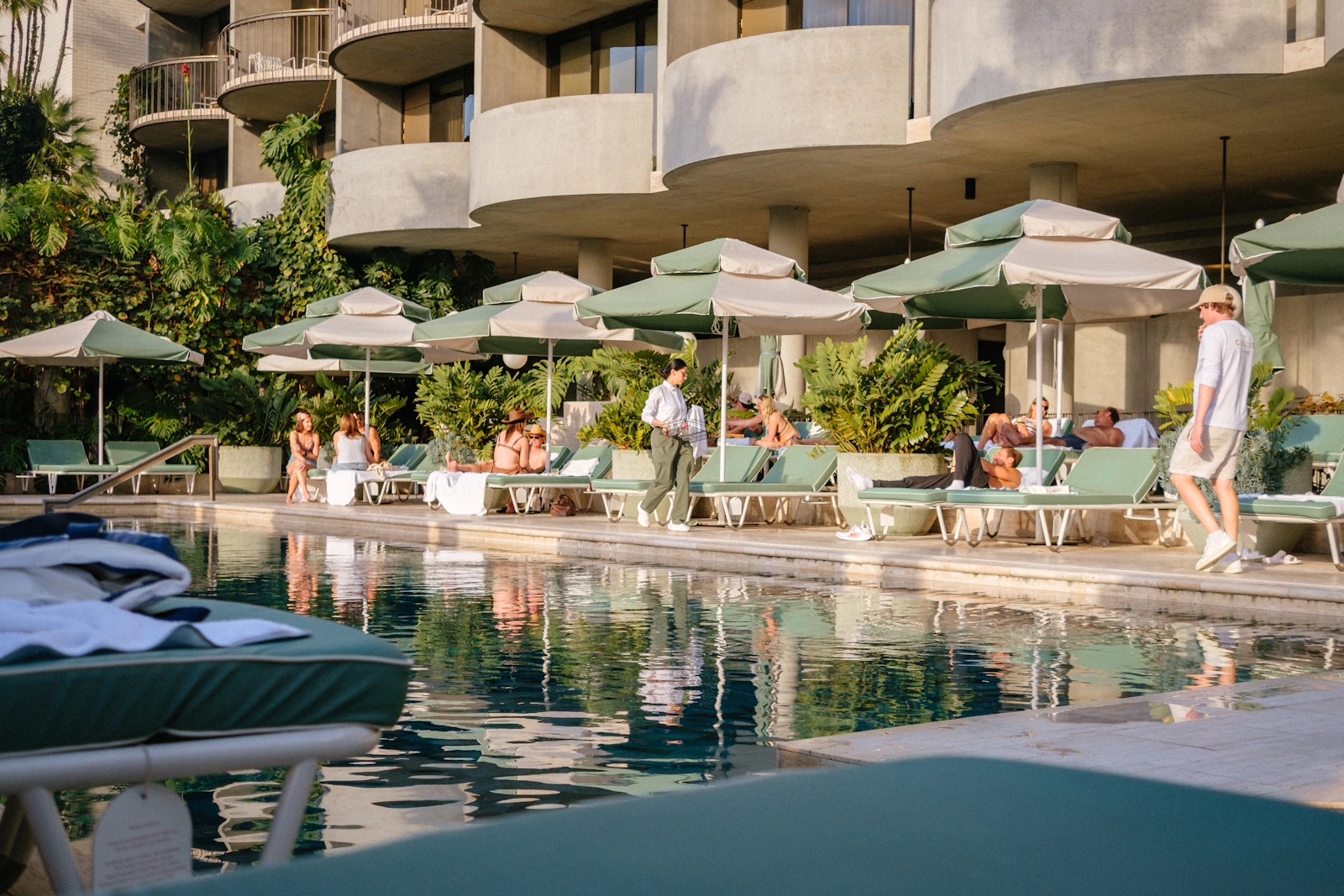
Why Pool Deck Flooring Is the Most Demanding Decision in Resort Design
Of all the surfaces in a resort property, the pool deck is the one that never gets a break. It bears the weight of hundreds of guests daily, endures relentless UV exposure in the Philippine sun, and remains perpetually wet. It must look pristine on day one and still perform flawlessly three years into operations — all while meeting the strict safety standards that hospitality liability requires.
Post-2025, Philippine resort development is accelerating. From Palawan and Siargao to the expanding leisure corridors of Batangas and Cebu, developers are racing to deliver properties that compete on a global hospitality stage. And increasingly, the architects and designers behind these projects are discovering that resort pool deck flooring is one of the most consequential material choices they will make — not just aesthetically, but operationally.
This guide breaks down what actually works in wet zone commercial environments: the performance criteria that matter, the material categories worth considering, and how leading hospitality projects in the Philippines are solving the durability-versus-luxury equation.
The Four Non-Negotiables for Commercial Pool Deck Surfaces
Before comparing materials, it helps to establish a clear performance framework. Any flooring system specified for a resort pool deck must satisfy four core requirements — and compromise on any one of them creates problems that surface quickly in a high-volume commercial environment.
1. Slip Resistance Under Wet Conditions
This is the most critical safety specification. The Pendulum Test Value (PTV) used internationally, and the equivalent standards referenced by Philippine building codes, define wet slip resistance thresholds for commercial flooring. For outdoor wet zones like pool decks, a minimum rating of R11 (or PTV 36+) is typically required. Many premium natural stone finishes, polished concrete, and glazed tiles — despite looking stunning — fall significantly short of this threshold when wet.
Slip-resistant commercial flooring in the Philippines needs to be specified with wet-zone ratings explicitly, not assumed from general product descriptions. This distinction matters enormously in hospitality environments where guest safety incidents carry significant liability exposure.
2. Resistance to Pool Chemicals and Constant Moisture
Chlorine, bromine, saltwater systems, and pool treatment chemicals are highly corrosive to many conventional flooring materials. Grout lines absorb these chemicals and degrade over time, causing tile systems to loosen. Some coatings blister or delaminate when water infiltrates the substrate. A commercial pool deck coating must be hydrophobically stable — meaning it repels and channels water rather than absorbing it — and chemically resistant across the full range of pool maintenance products.
3. Thermal Comfort and Heat Reflectivity
In the Philippine climate, where ambient temperatures regularly exceed 32°C and sun-exposed surfaces can reach 50°C or higher, surface temperature is a genuine comfort concern. Dark-toned or low-reflectivity surfaces become uncomfortable underfoot within hours of direct sun exposure. Outdoor hospitality surface design must account for solar reflectance index (SRI) values, particularly for surfaces that guests walk barefoot.
4. Longevity Under Heavy Foot Traffic
A resort pool deck in full operation sees foot traffic patterns comparable to a busy commercial corridor — but in an environment far more hostile to surface materials. Abrasion resistance, impact tolerance, and resistance to edge cracking or surface delamination all determine whether a flooring system looks acceptable after two years of commercial use or requires costly rehabilitation.
Material Comparison: What Works and What Doesn't
Natural Stone and Ceramic Tile: The Traditional Approach
Travertine, sandstone, and large-format porcelain tiles remain the default specification for many resort pool decks — and for good reason. They carry premium visual associations, are broadly understood by contractors, and offer a sense of permanence that clients find reassuring.
The operational challenges, however, are significant. Grout joints are maintenance-intensive in a chemically active wet zone. Large-format tiles require perfectly prepared substrates — any substrate movement causes cracking at grout lines, which then allows water infiltration beneath the tile bed. In tropical climates with heavy rainfall and temperature cycling, this is a recurring problem rather than an occasional one. The sealing requirements for natural stone are substantial, and failure to maintain those seals leads to staining and biological growth in the joints.
Tile-based systems also have an inherent limitation: they are not seamless. Every grout joint is a potential slip hazard, a maintenance point, and an infiltration pathway. For developers building to a five-star standard and expecting a ten-year lifecycle without major rehabilitation, the lifecycle cost of tile systems in wet zones frequently exceeds the initial cost savings.
Aggregate-Based Flooring Systems: Purpose-Built for Wet Zones
The most compelling development in outdoor hospitality surface design over the past decade has been the maturation of aggregate-based flooring systems — coatings that embed textured mineral particles into a durable binder to create surfaces that are simultaneously slip-resistant, visually refined, and dimensionally stable across a broad range of conditions.
These systems offer something that tile cannot: a seamless, grout-free horizontal plane that drains efficiently, resists chemical infiltration at the surface level, and can be applied across complex geometries including curves, steps, and landscape features without the limitations of modular tile formats.
TechStone's Mineral Sand Flooring is precisely this type of system — an aggregate-based flooring solution engineered for outdoor commercial environments. Applied to pool decks, resort walkways, driveways, and landscape surfaces, it delivers the slip resistance that wet zones demand alongside a refined aesthetic that suits luxury hospitality design. The textured aggregate surface maintains its grip characteristics even under continuous water exposure, making it one of the most appropriate specifications for pool deck coatings in the Philippine market.
Crucially, Mineral Sand Flooring is a horizontal surface system — designed specifically for floors and landscape surfaces — which means its performance characteristics are calibrated for the compressive loads, abrasion patterns, and drainage requirements of high-traffic outdoor flooring, not adapted from a wall coating application. This matters in commercial specification because purpose-built flooring systems consistently outperform adapted products in long-term durability testing.
Designing the Complete Pool Deck Environment
Beyond the Deck: Integrating Vertical Surfaces
A truly resolved pool deck design doesn't stop at the horizontal plane. The boundary walls, feature walls adjacent to the pool, the resort's exterior facades visible from the pool area — these vertical surfaces are equally important to the overall aesthetic and durability equation in a luxury resort landscaping context.
For exterior vertical surfaces in the pool environment — boundary walls, planters, feature columns, and resort facade sections that face the pool — the specification challenge mirrors the deck itself: high UV exposure, tropical rainfall, humidity, and the need to maintain a premium appearance with minimal maintenance.
Spray-applied systems like Opus are well-suited to these exterior vertical applications. Opus creates a sintered sand and polished concrete aesthetic on building facades and boundary walls — delivering a natural stone character that complements the organic materiality of a resort pool environment, while performing reliably on outdoor vertical surfaces. When a resort pool deck is finished in a warm aggregate tone and the surrounding boundary walls carry a coordinated Opus finish, the result is a cohesive material palette that reads as intentional and high-end rather than assembled from disconnected product choices.
Explore how these exterior surface systems come together in hospitality applications at TechStone's project portfolio.
Zoning the Pool Deck: Wet, Transitional, and Dry Areas
Sophisticated pool deck design recognizes that a resort pool zone is not a single uniform environment — it is a sequence of micro-environments with different performance requirements. The immediate pool surround (the splash zone) has the most demanding slip resistance and chemical exposure requirements. The transitional zone — sun lounger terraces, cabana areas, pathway connections — requires comfort underfoot and abrasion resistance but may have slightly reduced slip resistance demands. The dry zone, where the pool deck meets interior spaces or covered areas, has different moisture and UV exposure characteristics entirely.
Specifying a single material across all three zones without considering these gradations is a common design oversimplification that leads to either over-engineering in lower-risk areas or under-specifying in critical safety zones. The most successful resort pool environments use a primary flooring system across the wet and transitional zones and coordinate it with interior flooring systems at the threshold — creating visual continuity while maintaining appropriate performance differentiation.
Color, Tone, and the Luxury Expectation
The Philippine luxury resort market has moved decisively away from the stark white-and-blue aesthetic that defined pool design in the 1990s. Contemporary resort guests expect environments that feel like an extension of the natural landscape — warm sand tones, organic textures, and material palettes that evoke the coastal and tropical context of the property.
This shift has significant implications for flooring specification. Aggregate-based flooring systems with natural mineral tones align well with this design direction — they carry an inherent organic quality that manufactured tile cannot fully replicate, and their seamless application allows the material to read as a continuous ground plane rather than a tiled assembly. The texture and tone variation within aggregate systems also provides visual depth that registers as premium material quality to guests, even when the actual cost per square meter is competitive with high-end tile specifications.
Maintenance and Lifecycle Considerations for Commercial Operators
For resort developers and property managers, the cost of a flooring system is not its installation price — it is the total cost over a ten-year operational period, including routine maintenance, periodic resealing, repair of damaged sections, and eventual resurfacing. By this measure, seamless aggregate systems consistently outperform tile in wet zone commercial environments.
The elimination of grout joints alone reduces maintenance labor significantly. There are no joints to re-grout after chemical degradation, no individual tiles to replace after impact damage, and no complex cleaning protocols required to maintain hygiene in the joint network. A well-installed aggregate flooring system requires periodic cleaning with commercial-grade outdoor cleaners and, depending on the specific product system, a resealing cycle every few years — a straightforward maintenance protocol that resort engineering teams can execute without specialist contractors.
For resort operators running at high occupancy, minimizing the maintenance window — the period during which the pool area must be closed for surface work — is a direct revenue consideration. Seamless systems that can be maintained section by section without full deck closures offer a meaningful operational advantage over tile systems that require broader area shutdowns for repair work.
Specifying for the Philippine Climate: What International Standards Miss
International flooring specifications and performance standards are frequently developed in temperate climate contexts that do not reflect the realities of tropical commercial environments. The combination of intense UV radiation, high ambient humidity, dramatic rainfall events, and biological growth pressure from algae and organic matter creates a performance environment that is significantly more demanding than northern European or North American testing conditions.
Architects and specifiers working on Philippine resort projects should apply a conservative multiplier to international durability claims — and prioritize products that have demonstrated performance in Southeast Asian tropical conditions specifically. Local track record matters here: a product that has performed well on Filipino resort projects over five or more years of tropical operation is a more reliable specification than an internationally certified product without regional performance history.
TechStone's product systems are developed and tested with the Philippine construction environment in mind — a meaningful distinction for commercial projects where material performance in local conditions determines the actual outcome, not laboratory test results from overseas certification bodies.
The Bottom Line for Resort Architects and Developers
The pool deck is where a resort's design ambition meets its operational reality — and the flooring system is what either holds that meeting together or exposes the gap between the two. As Philippine resort development continues its post-2025 expansion, the projects that will define the market's quality benchmark are those where architects and developers have made deliberate, informed material choices rather than defaulting to familiar but underperforming specifications.
The combination of a purpose-built aggregate flooring system for the horizontal deck surface and a coordinated exterior wall coating for the surrounding vertical environment is the specification framework that delivers on both the luxury expectation and the operational durability requirement. It is not the lowest-cost path — but in a commercial hospitality environment, it is consistently the highest-value one.
For architects and developers working on upcoming resort projects in the Philippines, exploring the full range of outdoor and hospitality surface systems available through TechStone is a productive starting point. The Mineral Sand Flooring collection and the broader exterior finish systems represent a specification toolkit built for exactly the environment these projects demand.