
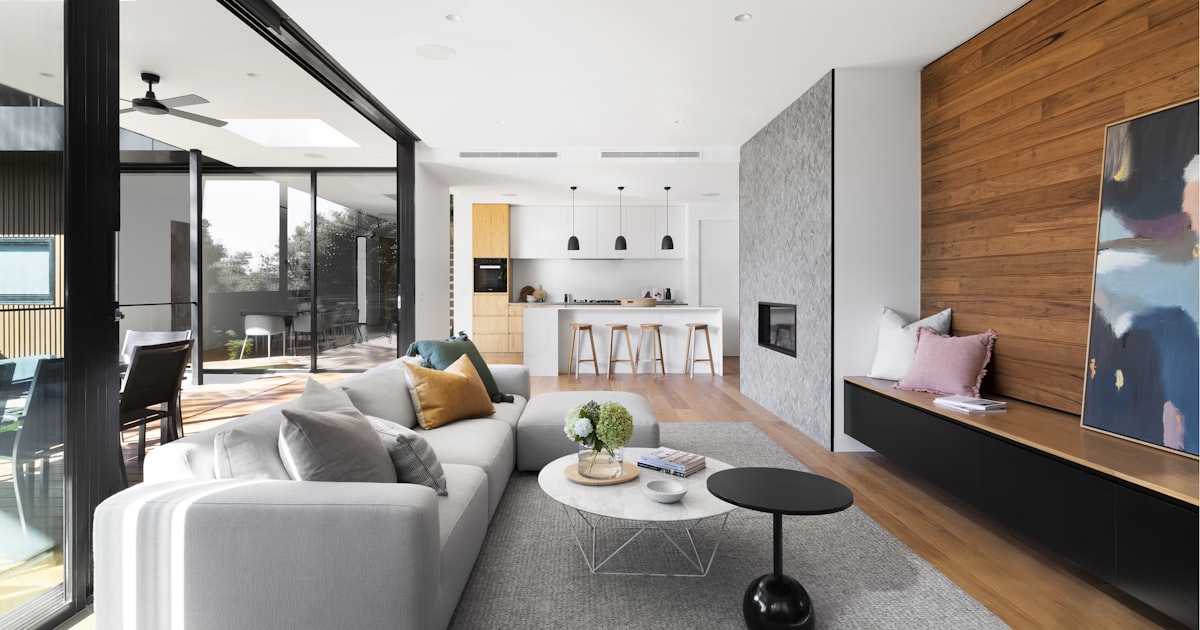
For the better part of a century, the tile has been the default floor finish in Southeast Asian architecture. Ceramic, porcelain, natural stone — the specific material varied with budget and aspiration, but the format was constant: discrete units bonded to a substrate with adhesive and separated by grouted joints. The ubiquity of tiled flooring was driven by practical logic — tiles are readily available, widely understood by the local labour force, and tolerant of the high-humidity environments that characterise the region.
Yet in the past five years, a notable shift has occurred. The specification of seamless cementitious floor systems — microcement, polished cement overlays, and decorative screeds — has expanded from a niche category into a mainstream specification choice across the Philippines, Thailand, Vietnam, and Indonesia. This shift reflects changes in design culture, construction practice, and material technology that together have created favourable conditions for joint-free flooring.
The Design Catalyst
The aesthetic preferences of Southeast Asian architecture have evolved significantly. A generation of locally trained architects, many with international studio experience, has brought a design sensibility that prioritises material honesty, spatial continuity, and textural authenticity. These values align naturally with seamless flooring, which presents the floor as a continuous material plane rather than a mosaic of individual elements.
The influence of global hospitality and retail design has accelerated this trend. International hotel brands and luxury retailers have adopted seamless cementitious floors as a signature material in their Southeast Asian properties, establishing a visual benchmark that local projects increasingly aspire to match. What was once perceived as an imported European affectation has been absorbed into the regional design vocabulary, adapted to local materials and conditions, and claimed as a native expression.
The Technical Enablers
The expansion of seamless flooring in the region has been enabled by two technical developments. First, the availability of polymer-modified cementitious systems formulated specifically for tropical conditions — with extended pot lives, humidity-tolerant cure mechanisms, and UV-stable pigmentation — has eliminated many of the performance concerns that historically limited cement-based floor systems in hot, humid climates.
Second, the development of a skilled local applicator base has reached a critical threshold. Seamless cementitious flooring is a craft-dependent system; its quality is determined as much by the skill of the applicator as by the formulation of the material. The investment in training and certification by material suppliers has produced a generation of Southeast Asian applicators whose technical competence equals that of their European counterparts.
The Practical Advantages
Beyond aesthetics, seamless flooring offers practical advantages that resonate strongly with the operational realities of Southeast Asian commercial spaces. The elimination of grout joints removes the primary maintenance liability of tiled floors — the discoloration, cracking, and biological growth that accumulate in joints exposed to tropical humidity and high foot traffic.
Installation speed is another factor. A skilled microcement team can complete a floor at a rate of thirty to fifty square metres per day, and the total system — from primer to topcoat — can be completed in five to seven working days for a typical commercial space. This timeline is competitive with large-format tile installations and significantly faster than natural stone, which requires precise cutting, dry-laying, and extended grouting and sealing processes.
Weight is a consideration that is often overlooked. Cementitious floor coatings add two to four kilograms per square metre to the substrate — a negligible structural load. Tile systems, including adhesive bed and grout, add fifteen to twenty-five kilograms per square metre. For renovation projects in existing buildings, particularly upper-floor commercial spaces, this weight differential can be the decisive specification factor.
Seamless flooring is not a trend — it is a convergence. Design aspiration, material technology, applicator skill, and operational pragmatism have aligned to create a permanent shift in how Southeast Asia finishes its floors.
The Challenges That Remain
The growth of seamless flooring in the region is not without challenges. Client expectations must be managed — cementitious floors are handmade surfaces that exhibit the subtle variations inherent in trowel-applied materials. They are not, and should not be compared to, factory-produced tiles with machine-perfect uniformity.
Moisture management in new construction remains a persistent issue. Concrete substrates in tropical climates retain moisture for extended periods, and the pressure to meet aggressive construction schedules can lead to premature coating application. Education — of specifiers, contractors, and applicators — on the critical importance of substrate readiness is an ongoing industry responsibility.
Despite these challenges, the trajectory is clear. Seamless cementitious flooring has moved from the periphery to the centre of the Southeast Asian specification landscape, and its position there appears both earned and durable.